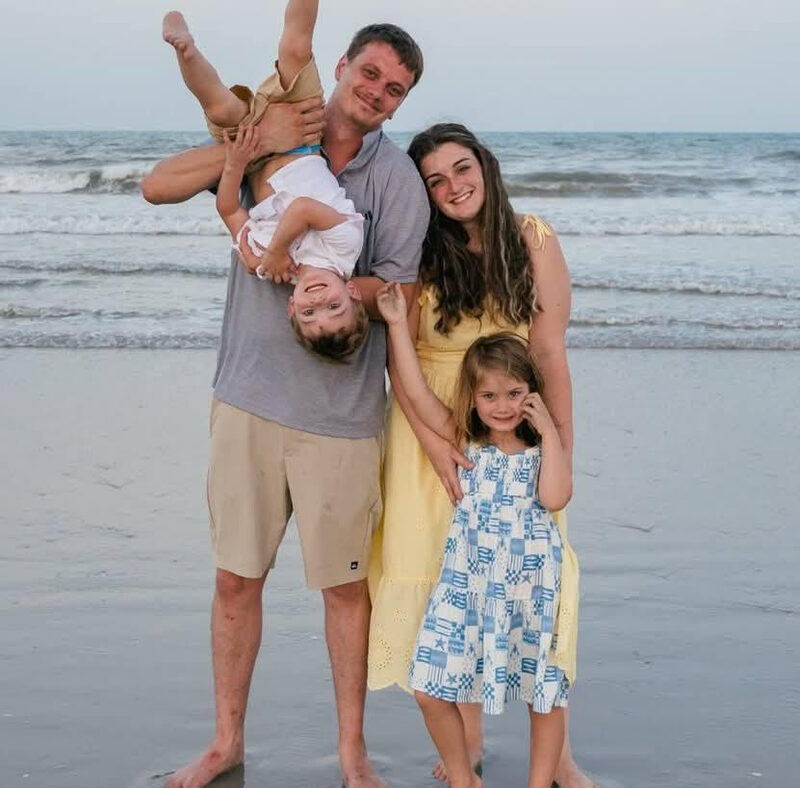
Cooper's Story
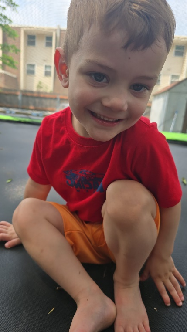
Cooper came into his parents' lives and felt like the missing puzzle piece to their family, bringing so much joy, love, and happiness into their home. But as he got older, Cooper stopped talking and struggled to sleep or make eye contact. Eventually, genetic testing revealed a mutation in his ITSN1 gene, beginning a long series of questions about Cooper's future and how best to help him.
Today, Cooper's family is supporting research for ITSN1 to help get answers for Cooper and all kids like him, to turn confusion and fear into understanding, and ultimately into new treatments and better support.
We are honored to share Cooper's story in this Q&A with his mother below.
Tell us about Cooper.
Cooper is such a light in our life. He loves books, watching dinosaur movies, swimming, and jumping on the trampoline. He came into our lives and truly felt like the missing puzzle piece to our family. From the moment he was born, he brought so much joy, love, and happiness into our home. He has always been the biggest cuddle bug and still loves being close to his mama. Even as a baby, Cooper was strong-willed and did things his own way. He has always beat to the rhythm of his own drum.
When was Cooper diagnosed with mutations in his ITSN1 gene?
As Cooper got older, we started noticing developmental differences and began searching for answers. We spent a long time wondering, researching, advocating for him, and trying to understand what was going on. Genetic testing eventually gave us an answer: he had a change in his ITSN1 gene. But with that answer also came so many new questions about what the future may look like.
Through all the unknowns, Cooper continues to amaze us every single day with his resilience, determination, and happy spirit. His big sister Avery has been right by his side through everything, loving him fiercely every step of the way.
How did you feel?
When we received the ITSN1 diagnosis, it felt like a wave of emotions all at once. Before genetic testing, we had spent so much time searching for answers, asking questions, and trying to understand why certain challenges were happening. So finally having a name for it brought some relief, because for the first time we felt like we weren't just imagining things or searching in the dark anymore.
But along with that relief came fear and a lot of uncertainty. Learning that I carry the same variant too made it even more emotional. Suddenly I wasn't only thinking about myself, but also replaying my son's journey, my own experiences growing up, and what this could mean for his future.
As a mom, one of the hardest parts was realizing that finally getting an answer didn't mean we suddenly had all the answers. In a lot of ways, it felt like the beginning of a whole new journey filled with even more questions. But it also gave us something important: connection, understanding, and a path forward. We found doctors, research, and other families who understand what this life looks like, and that has made us feel far less alone.
How does Cooper's condition affect him?
ITSN1 has affected my son's development. He turned 1 and was meeting all of his milestones. Then suddenly he started regressing and stopped talking completely and then stopped making eye contact and started having a harder time sleeping. We noticed differences in how he developed compared to other children. Speech and communication have been some of the biggest challenges, and he often struggles to express what he needs or understands. That can be really frustrating for him, especially when he knows what he wants but can't quite get it out.
He also has delays in certain developmental areas, along with sensory sensitivities and difficulty with transitions. Some days are smoother than others, and we've learned to adjust our expectations and meet him where he is instead of where typical milestones say he "should" be.
At the same time, he has so many beautiful strengths. He is affectionate, funny, observant, and deeply connected to the people he loves. He's a cuddle bug and thrives on closeness and comfort with his family.
Overall, his condition affects how he moves through the world, but it hasn't changed who he is: a bright, loving little boy who is learning and growing in his own way and in his own time.
How has Cooper's condition changed your family?
Cooper has taught our family to slow down, celebrate every little milestone, and appreciate things we may have once taken for granted. We are sharing his story to help raise awareness, support research, and hopefully help other families feel a little less alone. Most importantly, we want people to see Cooper the way we do — loving, unique, strong, and so much more than a diagnosis. We are all actively learning this new way of life and brainstorming on how we can help Cooper in the best ways possible, while also mourning a type of life that we thought we'd have with him.
Why is it important to you that people donate to ITSN1-related research?
Donating to ITSN1 research is so important because right now, families like mine are living with so many unknowns. When you first hear a diagnosis like this, you realize very quickly that there isn't a lot of information, and there definitely aren't many answers. Research is what changes that. It's what turns confusion and fear into understanding, and eventually into better treatments and support.
For our children, research means hope. Hope for earlier diagnosis, better therapies, and one day maybe even treatments that can truly improve quality of life. It also matters because families shouldn't have to feel alone in something this rare. Every study, every data point, every donation helps connect pieces of a much bigger puzzle. It helps doctors and scientists understand ITSN1 better, not just for our children today, but for future kids who will hopefully get answers sooner and support faster.