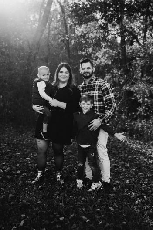
Lucas' Story
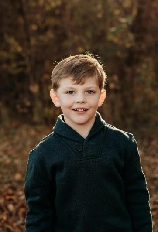
Since he was a baby, Lucas has always been happy, fun-loving, and kind. But when he was 2 years old, his mother, Jennifer, noticed signs of sleep and speech regression. A few years later, Lucas was diagnosed with autism. When his skills continued to regress, the family did genetic testing and discovered a genetic mutation in Lucas' ITSN1 gene — a gene so understudied that Jennifer struggled to find any answers.
But today, there is hope. Jennifer, Lucas, and their family are supporting research for ITSN1 that could help shed light on this gene and future therapies, making many families feel far less alone as they navigate something so rare.
Despite the challenges he faces — from struggling to hold a pencil to walking long distances — Lucas shows resilience every single day, overcoming obstacles and teaching his family a deeper understanding of unconditional love, patience, and strength.
We are honored to share their story below in this Q&A with Jennifer.
Tell us about Lucas.
Lucas is the happiest child I think I have ever met. He is full of laughter, fun, and all around a people-pleaser. He is always checking on how you are feeling. It's one of his morning routines. He will go around the house and at school and ask others, "How are you feeling today?" He is a true Wendy's and Starbucks lover with his order memorized for anyone willing to take him on a journey to these places. He is one of a kind and so loving. Although he may experience life differently, that difference brings so much beauty, honesty, and strength within our family. Every day with him is a reminder that progress does not always look the same for every child, but it is still worth celebrating. He also has a younger brother Kaleb who is 6 and has recently been diagnosed with ITSN1 but does not have an autism diagnosis.
When did you find out Lucas has a mutation in his ITSN1 gene?
Lucas was a wonderful baby. He was early with every milestone and had such a wonderful upbringing during his childhood. Around the age of 2, we noticed some severe regression, mostly sleep, and he had stopped talking all together. We had mentioned this to his pediatrician who recommended him get an evaluation for autism. As we waited over a year and a half for this evaluation, we noticed more regression in his fine motor skills, eating, and playing. Finally, around fall of 2021, Lucas was diagnosed with autism level 3. Although this diagnosis helped us answer a lot of questions about his regression, we still noticed he was losing skills faster than he was gaining. That is when we decided to get some genetic testing done and found out that Lucas has a genetic mutation in his ITSN1 gene.
How did you feel?
Receiving Lucas' autism diagnosis was heartbreaking. As a parent, you immediately worry about what challenges they may face in life. I think it's also a weird feeling of grieving a child who is still here but the regression you see puts you in a different perspective on life and planning your future changes. We now plan for lifetime, versus in a few months or years. You grieve high school graduation and being able to watch your child play sports on a team. However, it also brought us relief because we finally had answers and could begin getting him the support he needs.
Finding out about the ITSN1 mutation was an entirely different level of emotion. It was devastating to learn that such little information exists and that so many questions remain unanswered. As parents, you want to protect your child from everything, and it is difficult knowing there are things you cannot fix. Still, through all the fear and grief, Lucas continues to give us strength and hope.
How does Lucas' condition affect him?
Lucas faces challenges with communication, development, and everyday activities that many people may never notice from the outside. Simple tasks and changes in routine can become overwhelming for him and he often struggles to express his needs. Lucas has had the biggest challenge with his muscles. He has become weaker over the years and is struggling to simply hold a pencil to walking long distances. He has also been diagnosed with Hypotonia and is getting ankle and foot braces soon to help with some of his toe walking and to help strengthen his stride. Despite everything he faces, he continues to show resilience every single day. He has overcome obstacles we feared he never would. We are always so proud of his growth.
How has Lucas' condition changed your family?
Lucas' diagnosis has changed every part of our family's life. It has brought emotional, financial, and mental challenges that are difficult to fully put into words. There are days filled with exhaustion, worry, and heartbreak. When thinking about the future and watching him struggle, that hits our family the hardest. Lucas has also brought our family a deeper understanding of unconditional love, patience, and strength. He has taught us to appreciate the smallest victories and to never take a single moment for granted.
Why is it important to you that people donate to ITSN1-related research?
Research for ITSN1 is incredibly important because families like ours are searching for answers, treatments, and hope for the future. Right now, there is still so much unknown about this mutation, and many families feel alone navigating something so rare. Donations can also help researchers better understand how ITSN1 affects children and potentially lead to therapies and resources that could improve their quality of life. Supporting means giving families hope, and there's nothing more important.