Sawyer's Story
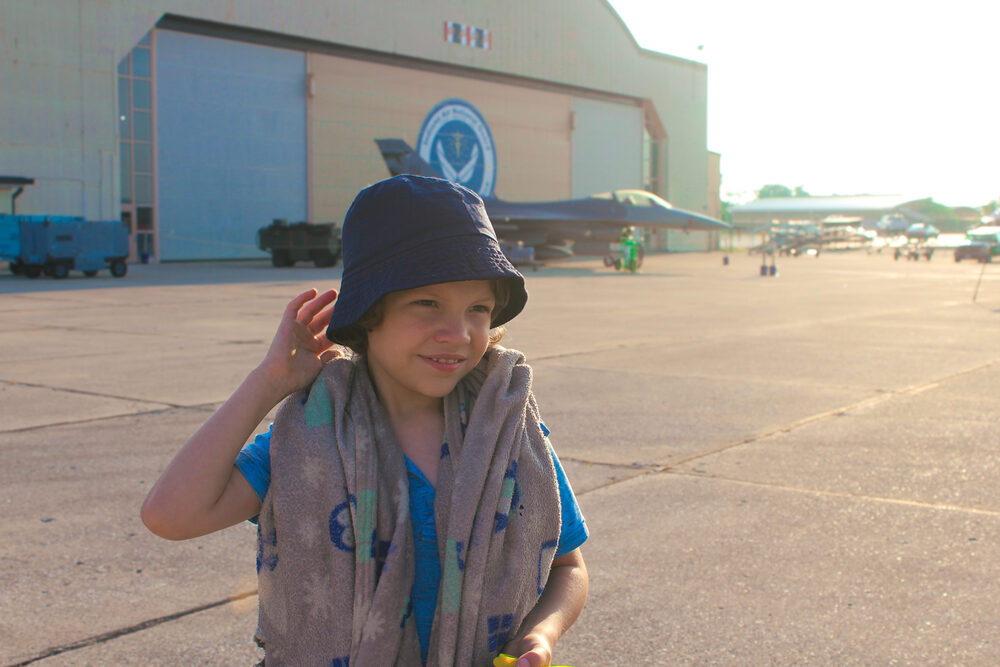
Sawyer is an active 9-year-old boy who loves to run, swing, and ride his bike. Around age 2, however, he lost his speech, stopped responding to others, and withdrew into his own world. After years of testing, his family learned that he has both autism and a mutation in his ITSN1 gene, a rare diagnosis that offered little insight into what the future may hold.
Today, supporting ITSN1 research has given Sawyer's family a chance to turn their uncertainty into action. Their dream is that research will lead to targeted treatments that can help children just like Sawyer recover lost skills and reach their full potential.
We are honored to share Sawyer's story in this Q&A with his mother below.
Tell us about Sawyer.
Sawyer is an active kid who loves to run, swing, ride his bike, and play outside. When he's not playing outside, he enjoys building with magnetic blocks and has made some great creations. He likes to watch TV shows and share his favorite parts with us, particularly the things he finds funny.
If Sawyer is determined to do something, he will find a way to get it done. He's a great problem solver. He has the best laugh.
When was Sawyer diagnosed with autism and ITSN1 mutations?
He was diagnosed with level 3 autism in 2020, right before turning 3 years old. In 2022, he was diagnosed with an ITSN1 mutation. At first, the gene variant was classified as being of unknown significance, but it was later determined to be pathogenic. It took a long time to get Sawyer tested and connected to therapies initially.
How did you feel when Sawyer received his diagnosis?
It was a mixture of emotions. Happy that we could finally put a name to his condition, but frustrated by the lack of information available and the long waitlists for services.
We hoped the diagnosis would provide answers about what his future might look like, but there were none. The research clinic would occasionally reach out with new information as it became available, but most of the time they were asking us for information. We were happy to provide whatever we could to help advance understanding but felt helpless without treatment options.
How has Sawyer's condition affected him?
Sawyer progressed normally until about 2 years old. Then he lost all speech, stopped responding to anyone around him, and withdrew into his own world. He didn't seem to understand us, and when he began school at age 3, he was diagnosed with a moderate intellectual disability.
Today, Sawyer is 9 years old and attends an applied skills program in public school. He participates in speech therapy to learn how to use an augmentative and alternative communication (AAC) device and receives music therapy to help build engagement.
He is extremely emotional and experiences a lot of ups and downs throughout the day. He has developed compulsions that cause him to repeat actions three times and appears to be developing some facial tics. He is a sensory seeker and can be fearless at times. He is also extremely routine-driven and very rigid about that. Toilet training has been difficult, and making friends can be hard for him as well.
How has Sawyer's condition affected your family?
It has affected our family in many ways. His sister, who is two and a half years older, struggled when he lost his ability to speak and could no longer interact with her the way he once had.
For a long time, we couldn't go into the community without meltdowns that would last for hours. This was hard on our entire family, but especially on our daughter, who was missing out on experiences. Now, we make exit plans when we go places so one parent can leave early with Sawyer if needed, but this can also leave our family feeling disconnected.
I also quit my career as a social worker and began working as a paraprofessional at Sawyer's school because we could not find childcare that could meet his needs. That decision significantly reduced our household income and continues to affect our family in many ways. We also decided not to have any more children after his diagnosis.
But perhaps the biggest challenge has been living with the fear of the unknown and an uncertain future. As a family, we continue to learn and adapt together. We are all learning American Sign Language because Sawyer has had some success using basic signs.
Why is it important to you that people donate to ITSN1-related research?
To help families like ours, treatments need to be developed. It is incredibly scary to receive a diagnosis with very little information about how the condition may affect your child throughout their life. There is so much uncertainty around which therapies and medications are best.
Targeted treatments that could potentially help children recover lost skills are the ultimate dream for our family. Research is the only way to move toward those possibilities.
Anything that helps make life easier and less scary for people living with an ITSN1 gene difference is worth supporting. Every donation helps researchers better understand this condition and brings families like ours closer to answers.